简体中文
简体中文 Deutsch
 日本語
日本語 한국어
한국어 Tiếng Việt
 Русский
 ไทย
ไทย Bahasa Indonesia
 Bahasa Melayu
 Filipino
 لالعربية
 Français

The core requirements of e-commerce warehouse handling
The daily operation of e-commerce warehouses is characterized by large order batches and fast turnover, which has clear requirements for the efficiency and flexibility of handling equipment. On the one hand, the order volume surges during the big promotion period, and the handling equipment needs to operate continuously and stably to support high-frequency goods transfer; on the other hand, e-commerce warehouses mostly use intensive shelf layouts, with relatively narrow channel spaces, and equipment needs to have good traffic and steering capabilities to adapt to complex storage environments.
Practical application performance of BYD P20JS electric pallet truck
Adapt to high-frequency operation scenarios
In the daily operation of the e-commerce warehouse, this electric pallet truck can quickly complete the loading, unloading and transshipment tasks of pallet goods. Its operation process is simple, and the operator can get started after simple training, reducing the learning cost of personnel. During the peak period of the big promotion, the equipment can be operated continuously for a long time, and with reasonable scheduling and charging planning, it can effectively deal with the handling demand that breaks out in a short period of time to ensure the efficiency of goods circulation.
Suitable for narrow storage spaces
In view of the narrow passage of the e-commerce warehouse, the body design of the pallet truck is compact, with a small turning radius, which can flexibly steer and pass in a limited space, and can complete the cargo handling between the shelves without additional widening of the channel, avoiding the waste of storage space. At the same time, the braking response of the equipment is fast, and it can stop running in time in the working area where personnel and goods are mixed, improving the safety of the operation.
Energy consumption and maintenance advantages
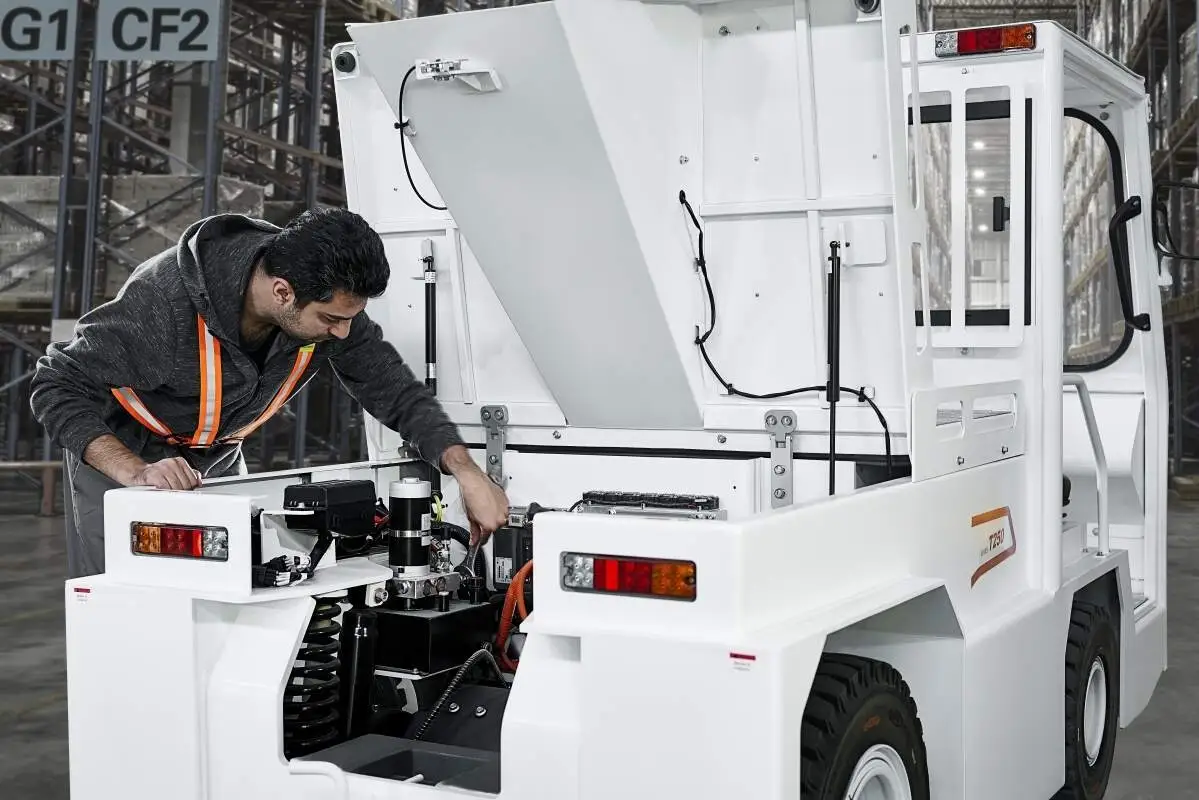
As an electric handling equipment, the energy consumption of the power system it uses is stable, and the power consumption is relatively balanced during daily use, reducing the energy cost of warehousing operations. In terms of maintenance, the structural design of the equipment simplifies the replacement process of vulnerable parts, eliminating the need for complex tools for daily maintenance, reducing the time for equipment downtime and maintenance, and further ensuring the continuity of warehousing operations.
Notes in practical application
In the actual use process, it is necessary to plan the use time and charging time of the equipment reasonably according to the weight of the goods in the warehouse and the operation frequency to avoid affecting the operation progress due to insufficient power. At the same time, regularly check the braking system, tires and other components of the equipment to ensure that the equipment is in good operating condition and improve the safety and life of use.