简体中文
简体中文 Deutsch
 日本語
日本語 한국어
한국어 Tiếng Việt
 Русский
 ไทย
ไทย Bahasa Indonesia
 Bahasa Melayu
 Filipino
 لالعربية
 Français
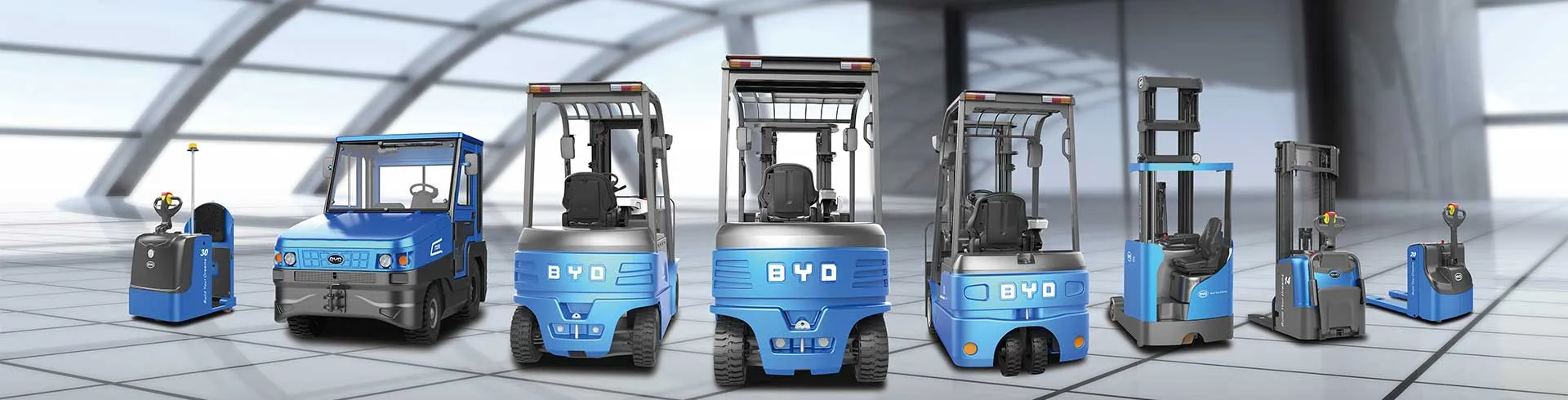
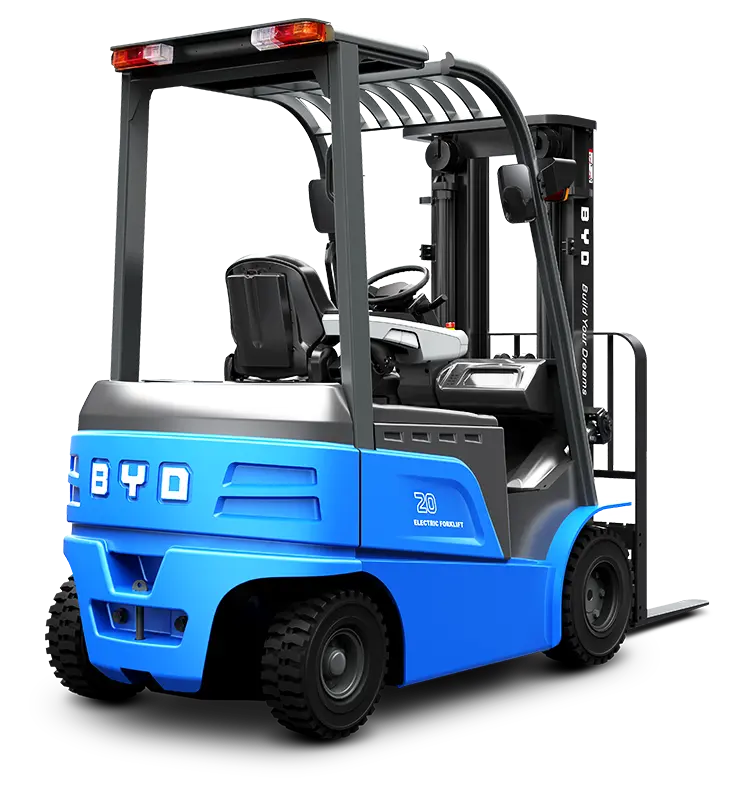
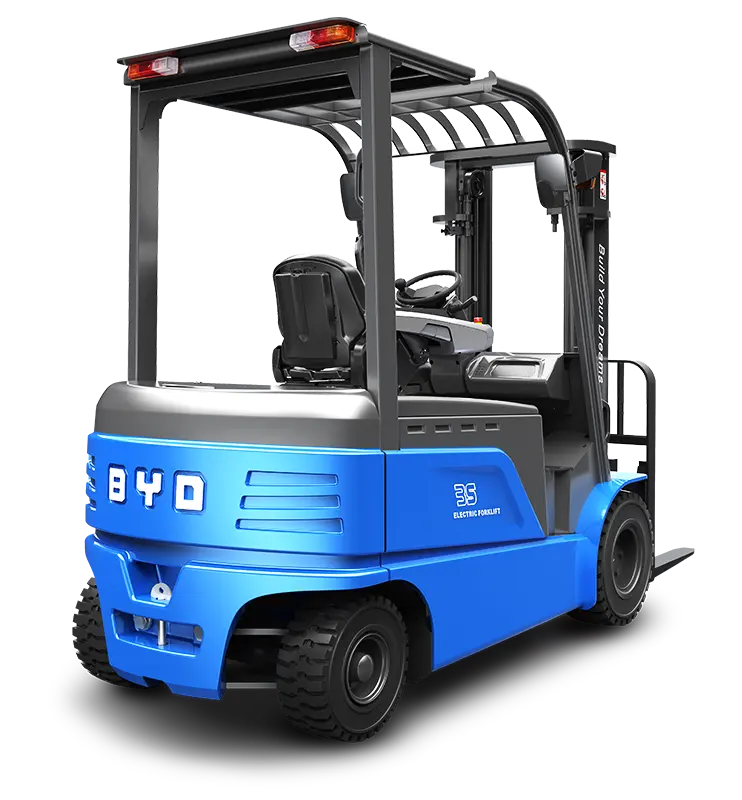
In modern material handling scenarios, pallet trucks have become one of the core equipment in warehousing and logistics fields due to their flexible and efficient characteristics. Different models of pallet trucks have obvious differences in performance and application scenarios, and reasonable selection directly affects operation efficiency and cost control. The following is a detailed comparison of BYD Blue Ant series P15 and P20 pallet trucks to provide users with selection reference.
Carrying capacity and body size difference
The core difference between the two pallet trucks is first reflected in the carrying capacity. The P15 is positioned as a 1.5-ton pallet truck, which is suitable for the handling of light-duty materials; the P20 is a 2-ton pallet truck, which can cope with heavier cargo handling needs. In terms of body size, the P15 body is relatively compact, with a smaller turning radius, more flexible operation in narrow warehouse passages and shelf gaps, and can adapt to the working environment with limited space. The body size of the P20 is slightly larger. In order to match the higher bearing capacity, the body structure is more stable, and the heavy-duty handling can be completed more stably in the open working area.
Differences in battery life and power configuration
Battery life and power performance are key factors affecting the continuity of operations. The P15 is equipped with a moderate battery capacity, suitable for short-distance, high-frequency light-load operations, such as cargo sorting in small e-commerce warehouses, shelf replenishment and other scenarios, a single charge can meet the needs of about half a day of operations; P20 is equipped with a larger capacity battery, with stronger battery life and stronger power output, which can support long-term continuous heavy-load handling, such as large logistics center cargo transfer, industrial plant raw material transportation and other scenarios, reducing the frequency of midway charging and improving overall operating efficiency.
Application scenario difference
Based on the above performance differences, the applicable scenarios of the two pallet trucks are also different. The P15 is more suitable for scenarios with limited space and light handling load, such as the shelves of goods in community supermarkets, the order processing of small e-commerce warehouses, etc. Its flexible handling performance effectively improves the operation efficiency in narrow spaces. The P20 is more suitable for scenarios with open space and heavy load requirements, such as material turnover in large industrial plants, bulk cargo handling in third-party logistics centers, etc. The stable body and strong power can ensure the stability and continuity of heavy-duty operations.
Selection suggestion
When selecting a model, users first need to clarify their own operating needs: if the daily handling of goods weighs less than 1.5 tons and the working space is relatively narrow, P15 is preferred; if they need to handle about 2 tons of heavy-duty goods, the operation scene is mainly open area, and the operation time is long, then P20 is more in line with the needs. In addition, it is also necessary to comprehensively consider factors such as operation frequency and charging conditions to ensure that the selected pallet truck can maximize its own material handling needs and improve operation efficiency.