
 简体中文
简体中文 Deutsch
 日本語
日本語 한국어
한국어 Tiếng Việt
 Русский
 ไทย
ไทย Bahasa Indonesia
 Bahasa Melayu
 Filipino
 لالعربية
 Français
General requirements for cold chain warehousing and low temperature operations
Scenarios Common homework difficulties
Most cold chain warehouses that have been in a sub-zero environment for a long time generally have the characteristics of high humidity and large temperature fluctuations. Ordinary handling equipment that has been operating in such scenarios for a long time is prone to problems such as hydraulic system cards, abnormal battery life attenuation, and lagging response of control components. Frosting and freezing on the surface of components will also accelerate wear and tear, increase subsequent maintenance costs, and interfere with the normal turnover efficiency of warehoused goods.
Equipment low temperature adaptation related design instructions
Core system low temperature adjustment content
The battery management system of this electric forklift is specially adapted for low temperature scenarios, and the corresponding protective structure can alleviate the problem of battery life attenuation in low temperature environments. The hydraulic components are specially adapted to low temperature environments to ensure the smoothness of conventional movements such as driving, lifting, and steering, without limiting power output at low temperatures.
Body details antifreeze treatment
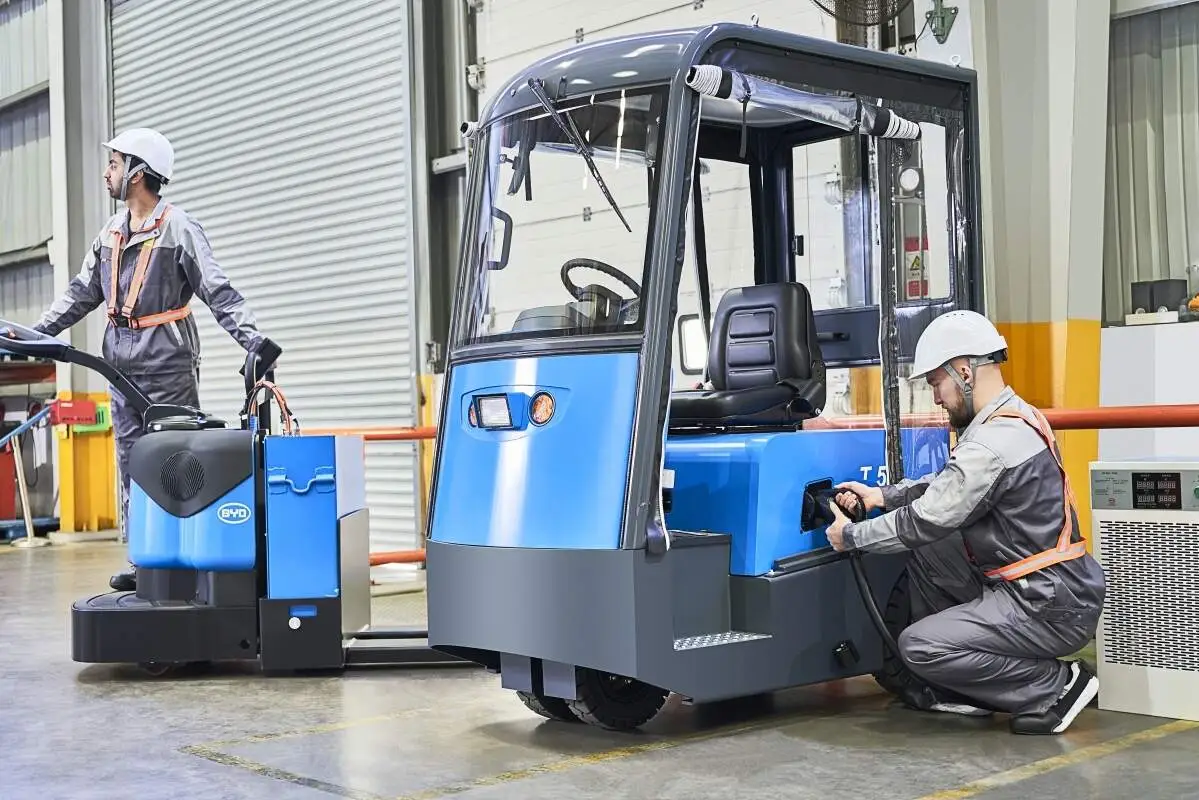
The exposed control buttons, load-bearing wheel sets, sealing strips and other components of the vehicle are all made of materials that are resistant to low temperature and embrittlement. Long-term operation in the cold storage environment is not prone to cracking failure problems. The optional cold-proof enclosure of the open cab can reduce the impact of cold wind on the operator and improve the comfort of long-term operation.
Daily application operation and maintenance guidelines
Precautions for scene usage
When using this equipment in cold chain storage scenarios, it is recommended to complete a few minutes of warm-up operation before entering the low-temperature storage area each time. After the operation, the vehicle should be parked in a buffer area with suitable temperature. After waiting for the frost attached to the body surface to melt and evaporate naturally, it should be moved to a regular area for charging. Regular lubrication and maintenance of moving parts according to instructions can ensure long-term stable operation of the equipment and provide reliable support for cold chain storage and handling operations.


