简体中文
简体中文 Deutsch
 日本語
日本語 한국어
한국어 Tiếng Việt
 Русский
 ไทย
ไทย Bahasa Indonesia
 Bahasa Melayu
 Filipino
 لالعربية
 Français
How to choose the height of the door frame of a 3.5-ton lithium battery forklift 3-6 meters Comparison and analysis of mainstream working conditions
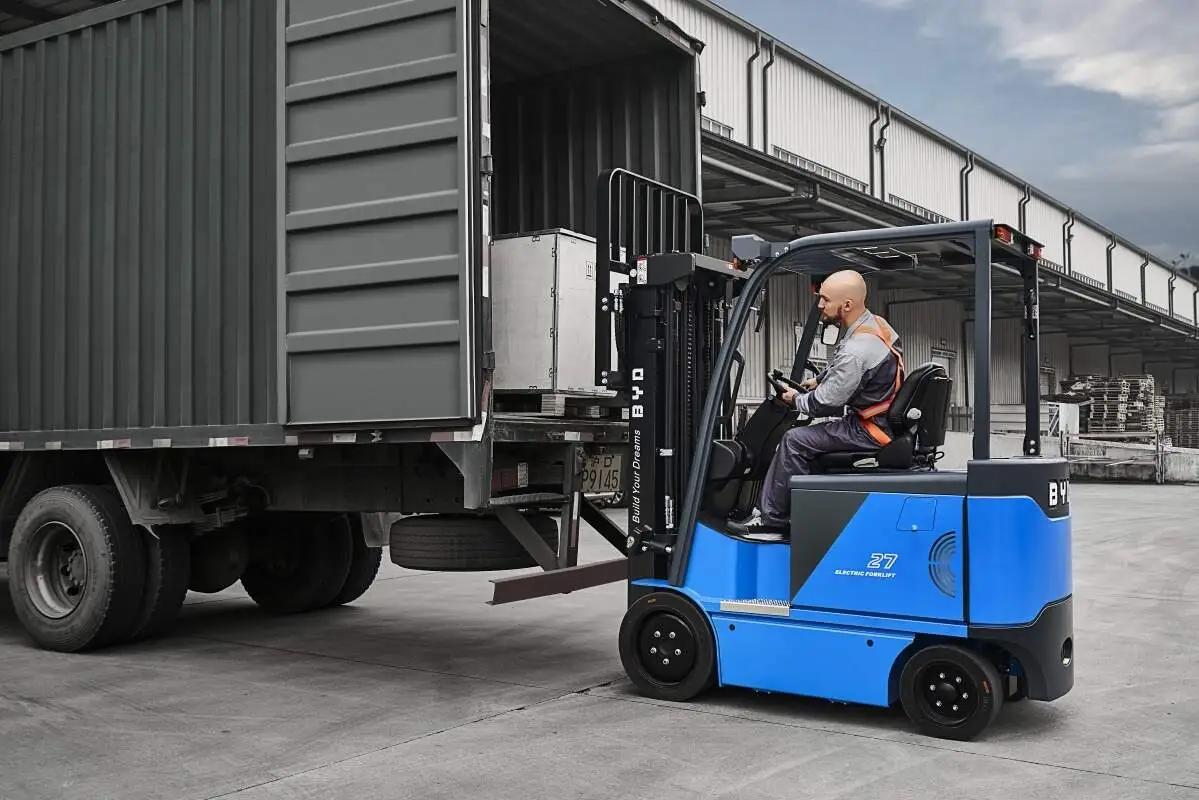
As practitioners in the field of electric forklifts, we often encounter users' inquiries about the height of the door frame of 3.5-ton lithium-ion forklifts. 3-6 meters is the most common lifting operation range for this tonnage model. The choice of door frame height directly affects the operation efficiency, site utilization and equipment procurement costs. It needs to be carefully considered in combination with various requirements.
Core Adaptation Elements for Lifting Height Selection
The first thing to consider is the site and space constraints. The space here mainly includes the clear height of the warehouse, the height of the obstacles above the passage, and the operating range of the operation area. The clear height of the warehouse should be subtracted from the occupied space of the top ventilation pipes, fire protection facilities, and lighting equipment, and sufficient safety margin should be reserved. It is generally recommended that the safety margin be kept at least 20 cm or more to avoid the collision of goods or the top of the door frame during lifting. If there are fixed obstacles such as beams and water pipes above the passage, it is necessary to measure the height from the bottom of the obstacle to the ground to ensure that the total height of the door frame after shrinking is lower than this value, so that it can pass freely.
The second thing to pay attention to is the actual needs of cargo storage and loading and unloading, mainly depending on the maximum number of stacking layers of goods, the height of single cargo, and the height difference of the loading and unloading platform. When calculating the maximum stacking height, you need to multiply the height of the single cargo by the number of layers, plus the thickness of the fork itself and the height of the tray, and finally reserve a safety margin. For example, if the height of the single cargo is 1.2 meters, and it needs to be stacked with 4 layers, the thickness of the tray is 12 cm, and the thickness of the fork is 8 cm, then the theoretical lifting height required is about 1.24 + 0.12 + 0.08 = 5 meters.
Comparison of working conditions in 3-6 meters mainstream lifting range
The lifting range of about 3 meters corresponds to most light and short-cycle operation scenarios, such as temporary picking of e-commerce warehouses, ground loading and unloading in small factories, and short-distance pallet transfer. The door frame in this section usually uses two-stage full-free door frames, and the total height after contraction is low, which can adapt to narrow passages and low warehouses. The procurement cost is relatively moderate, and the operation difficulty is not high. The requirements for operators are relatively basic.
The lifting range of about 6 meters corresponds to medium and heavy-duty, high-density storage operation scenarios, such as high-rise shelf storage in large logistics centers, raw materials and finished product storage in machinery manufacturing enterprises, etc. The door frame in this range usually uses three-stage full-free door frames, which can meet higher stacking requirements, and the total height after shrinkage is not too high. It is suitable for use in sites with a certain channel width, but the procurement cost will increase. When operating, more attention needs to be paid to vision and stability, and it is best to be driven by experienced operators.