
 简体中文
简体中文 Deutsch
 日本語
日本語 한국어
한국어 Tiếng Việt
 Русский
 ไทย
ไทย Bahasa Indonesia
 Bahasa Melayu
 Filipino
 لالعربية
 Français
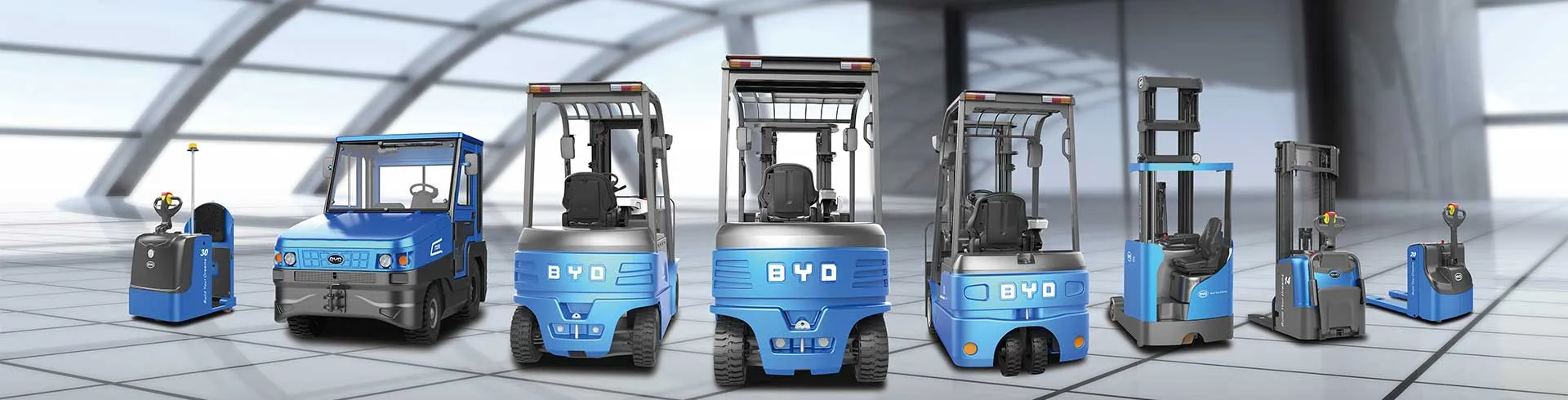
H2: New energy forklift: the core driving force for the intelligent upgrade of warehousing and logistics
H3: Industry Trends: Warehousing Logistics Demand for Efficient Equipment Upgrades
With the rapid development of e-commerce, manufacturing and other industries, the warehousing and logistics industry has put forward higher requirements for the efficiency, environmental protection and adaptability of handling equipment. Traditional fuel forklifts have problems such as noise pollution and exhaust emissions, and their application is limited in special scenarios such as indoor and low temperature. Warehousing and logistics are transforming in the direction of greening and intelligence. With the advantages of zero emissions, low noise and low energy consumption, new energy forklifts have gradually become the core choice for industry upgrading.
H3: New energy forklift technology empowers storage scenarios
New energy forklifts are powered by lithium batteries or lead-acid batteries, which offer significant technical advantages: first, the zero-emission characteristics meet the requirements of environmental protection policies and are suitable for indoor environments sensitive to air quality; second, the operating noise is lower than that of traditional fuel equipment, reducing interference to operators; third, the power response speed is fast, which can reach the maximum torque in a short time, improving the efficiency of cargo loading and unloading; fourth, the battery life can meet the needs of multi-shift operations, and fast charging technology can achieve rapid replenishment and reduce the idle time of equipment.
H2: Analysis of multi-scenario requirements for warehousing and logistics
H3: E-commerce warehousing: high-frequency turnaround and space optimization requirements
The core features of e-commerce warehousing are high order frequency and a wide variety of SKUs, which require equipment with flexible steering and small radius operation capabilities. For example, in a dense shelf environment, electric forklifts need to support narrow channel operation to avoid shelf collisions through precise steering; in the face of a large number of small cargo turnover, equipment needs to have fast lifting and lowering performance, and cooperate with intelligent dispatching systems to improve sorting efficiency.
H3: Cold chain storage: Low temperature environment and low noise requirements
Cold chain storage requires high cold resistance and stability of equipment. New energy forklifts need to be adapted to a low temperature environment of -20 ° C to -30 ° C to ensure that core components such as batteries and motors operate normally at low temperatures; at the same time, the low-noise design (≤65 decibels) can avoid affecting the storage environment of goods in the cold storage, and there is no exhaust emissions to ensure the safety of cold chain food.
H3: Manufacturing Warehousing: Heavy Goods and Precision Handling Requirements
Manufacturing warehousing often involves the handling of heavy pallets and large equipment. Electric forklifts need to have high load-bearing capacity (such as 3 tons to 5 tons) and a stable hydraulic system to ensure that the goods do not tilt or slip during loading and unloading. In addition, precise positioning functions (such as laser navigation) can achieve precise docking of shelves and goods, reduce manual adjustment errors, and improve handling accuracy.
H2: Key factors for multi-scenario adaptability of electric forklifts
H3: Adaptability of power system and battery life
Different scenarios have significant differences in power requirements: heavy cargo handling requires high-power motors and high torque output; high-frequency turnaround scenarios require large-capacity batteries or fast charging technology. By optimizing the battery management system (BMS), electric forklifts can intelligently adjust energy consumption according to the operating time, reducing operating costs while ensuring battery life.
H3: Adaptability to operation flexibility and operation accuracy
The steering radius, operating handle comfort, etc. directly affect the operation efficiency. Electric forklifts can achieve small radius turns below 1.5 meters by adopting compact design and hydraulic power steering to adapt to narrow passages; models equipped with visual aids or lidar can automatically identify the contour of goods, improve loading and unloading accuracy, and reduce the damage rate of goods.
H3: Intelligent management system integration adaptability
Modern warehousing and logistics pay more attention to digital management. Electric forklifts need to support docking with warehousing management systems (WMS) and dispatching systems, real-time feedback on equipment operation status (such as power, fault warning), and optimize the operation path through data collection to improve the overall warehousing management efficiency.
H2: Future Outlook: Deep Integration of New Energy Forklifts and Warehousing Logistics
With the continuous progress of electrification and intelligent technology, new energy forklifts will be further upgraded in terms of cruising range, intelligent interaction, and safety protection. In the future, electric forklifts with automatic obstacle avoidance and autonomous planning paths will cooperate with AGVs and robots to promote the development of warehousing and logistics towards unmanned and full-process automation, becoming the core support of green warehousing systems.


