2026-06-20

2-Tonnen-Elektrohubwagen-Betriebsoptimierungsplan: BYD P20JS-Anwendungsteilung

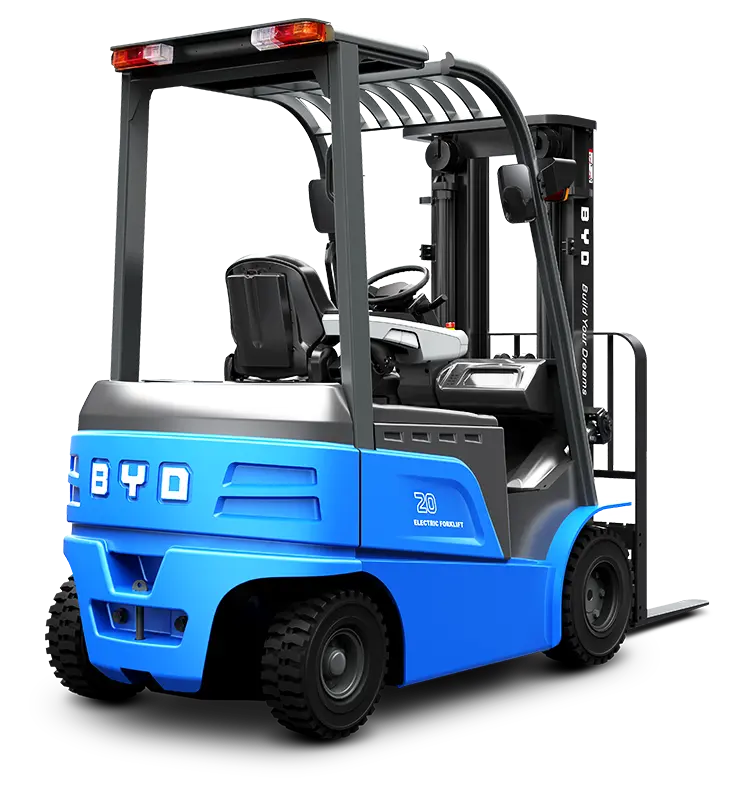
2-Tonnen-Elektrohubwagen-Betriebsoptimierungsplan: BYD P20JS-Anwendungsteilung(Figur1)

In der Lagerlogistik und im industriellen Umschlag werden häufig 2-Tonnen-Elektrohubwagen als Materialumschlaggeräte eingesetzt. Durch gezielte Betriebsoptimierung kann die Betriebseffizienz der Anlage effektiv verbessert und die Betriebskosten gesenkt werden. In diesem Beitrag wird die praktische Anwendung von P20JS-Elektrohubwagen kombiniert, um eine Reihe praktischer Betriebsoptimierungsprogramme zu präsentieren.

Lastanpassung und Optimierung der Betriebsspezifikationen

Angemessene Abstimmung der Arbeitsbelastung

Die Nennlast des 2-Tonnen-Elektrohubwagens beträgt 2 Tonnen. Im tatsächlichen Betrieb muss die Betriebsart entsprechend dem Gewicht der Ware und den Spezifikationen der Palette angepasst werden. Um zu vermeiden, dass Waren mit hoher Dichte über einen längeren Zeitraum voll oder sogar überlastet werden, können sie chargenweise gehandhabt werden, um den Lastverlust des Gerätemotors und des Hydrauliksystems zu verringern. Stellen Sie gleichzeitig sicher, dass die Waren gleichmäßig auf der Palette verteilt werden, um die durch einseitiges Gewicht verursachte Fahrabweichung der Ausrüstung zu vermeiden und die Stabilität des Betriebs zu verbessern.

Standardisieren Sie den Betriebsprozess

Die Bediener müssen professionell geschult sein, um die Start- und Stopp-, Lenk-, Hebe- und sonstigen Bedienungsfähigkeiten der Ausrüstung zu beherrschen. Kontrollieren Sie beim Anfahren, Wenden und Be- und Entladen von Gütern die Fahrgeschwindigkeit, um plötzliches Beschleunigen und plötzliches Bremsen zu vermeiden und den Verschleiß von Ausrüstungsteilen zu verringern. Stellen Sie beim Be- und Entladen von Gütern sicher, dass die Gabel vollständig unter die Schale eingeführt und vor der Fahrt auf eine geeignete Höhe angehoben wird, um zu verhindern, dass die Güter herunterfallen oder die Ausrüstung umkippt.

Optimierung von Auftragspfaden und Terminplanung

Optimieren Sie den Arbeitspfad im Feld

Planen Sie in Verbindung mit dem Lagerlayout und dem Lagerort der Waren den optimalen Umschlagweg, um die ungültige Fahrstrecke zu reduzieren. Platzieren Sie beispielsweise die Hochfrequenz-Umschlaggüter in der Nähe des Ausgangshafens, um die Hin- und Rückfahrt zu verkürzen; nutzen Sie die Kanalbreite des Lagers, um die Einbahnstraße zu planen, um Staus durch Querverkehr zu vermeiden und die Gesamteffizienz des Betriebs zu verbessern.

Intelligente Planung und Aufgabenzuweisung

Je nach Arbeitsvolumen und Gerätestatus werden die Bearbeitungsaufgaben sinnvoll zugewiesen. Wenn mehrere Geräte gleichzeitig arbeiten, wird eine Überschneidung der Aufgaben durch eine Vor-Ort-Planung vermieden, und die Bearbeitung dringender Güter wird vorrangig behandelt. Gleichzeitig werden die Betriebszeit und die Erledigungsquote der Geräte regelmäßig gezählt, und die Planungsstrategie wird angepasst, um sicherzustellen, dass die Ausrüstungsressourcen vollständig genutzt werden.

Optimierung des Energiemanagements und der Instandhaltung

Überwachung des Energieverbrauchs und energiesparender Betrieb

Der Energieverbrauch des Elektrohubwagens hängt eng mit den Betriebsgewohnheiten zusammen. Vermeiden Sie während des Betriebs einen langen Leerlauf und schalten Sie den Strom im Leerlauf rechtzeitig aus. Nutzen Sie die Energierückgewinnungsfunktion des Geräts, um einen Teil der elektrischen Energie zurückzugewinnen, wenn es bergab geht oder langsamer wird, und verlängern Sie die Batterielebensdauer. Überprüfen Sie regelmäßig den Batteriestatus, um sicherzustellen, dass die Ladeumgebung den Anforderungen entspricht und die Batterielebensdauer verbessert wird.

Routinemäßige Wartung und Fehlervermeidung

Richten Sie einen regelmäßigen Wartungsmechanismus ein, überprüfen Sie die Bremsen, Reifen, Gabeln und Hydrauliksysteme des Geräts vor dem täglichen Betrieb und erkennen und beheben Sie potenzielle Fehler rechtzeitig. Reinigen Sie regelmäßig die Oberfläche und die Innenteile des Geräts, um das Eindringen von Staub und Schmutz in den Motor oder das Hydrauliksystem zu vermeiden. Entsprechend den Anforderungen des Benutzerhandbuchs des Geräts sollten Sie regelmäßig Schmieröl und Verschleißteile austauschen, um sicherzustellen, dass das Gerät in gutem Zustand ist.

Durch die Anwendung des oben genannten Optimierungsschemas kann die Effizienz des 2-Tonnen-Elektrohubwagens P20JS im tatsächlichen Betrieb erheblich verbessert werden, während gleichzeitig die Ausfallrate der Ausrüstung und die Betriebskosten gesenkt werden, was eine zuverlässige Unterstützung der Ausrüstung für Lager- und Logistikvorgänge ermöglicht.
Whatsapp

WeChat

Kontaktieren Sie uns

Verhandeln.

We use cookie to improve your online experience. By continuing to browse this website, you agree to our use of cookie.

Cookies

Please read our Terms and Conditions and this Policy before accessing or using our Services. If you cannot agree with this Policy or the Terms and Conditions, please do not access or use our Services. If you are located in a jurisdiction outside the European Economic Area, by using our Services, you accept the Terms and Conditions and accept our privacy practices described in this Policy.
We may modify this Policy at any time, without prior notice, and changes may apply to any Personal Information we already hold about you, as well as any new Personal Information collected after the Policy is modified. If we make changes, we will notify you by revising the date at the top of this Policy. We will provide you with advanced notice if we make any material changes to how we collect, use or disclose your Personal Information that impact your rights under this Policy. If you are located in a jurisdiction other than the European Economic Area, the United Kingdom or Switzerland (collectively “European Countries”), your continued access or use of our Services after receiving the notice of changes, constitutes your acknowledgement that you accept the updated Policy. In addition, we may provide you with real time disclosures or additional information about the Personal Information handling practices of specific parts of our Services. Such notices may supplement this Policy or provide you with additional choices about how we process your Personal Information.


Cookies

Cookies are small text files stored on your device when you access most Websites on the internet or open certain emails. Among other things, Cookies allow a Website to recognize your device and remember if you've been to the Website before. Examples of information collected by Cookies include your browser type and the address of the Website from which you arrived at our Website as well as IP address and clickstream behavior (that is the pages you view and the links you click).We use the term cookie to refer to Cookies and technologies that perform a similar function to Cookies (e.g., tags, pixels, web beacons, etc.). Cookies can be read by the originating Website on each subsequent visit and by any other Website that recognizes the cookie. The Website uses Cookies in order to make the Website easier to use, to support a better user experience, including the provision of information and functionality to you, as well as to provide us with information about how the Website is used so that we can make sure it is as up to date, relevant, and error free as we can. Cookies on the Website We use Cookies to personalize your experience when you visit the Site, uniquely identify your computer for security purposes, and enable us and our third-party service providers to serve ads on our behalf across the internet.

We classify Cookies in the following categories:
 ●  Strictly Necessary Cookies
 ●  Performance Cookies
 ●  Functional Cookies
 ●  Targeting Cookies


Cookie List
A cookie is a small piece of data (text file) that a website – when visited by a user – asks your browser to store on your device in order to remember information about you, such as your language preference or login information. Those cookies are set by us and called first-party cookies. We also use third-party cookies – which are cookies from a domain different than the domain of the website you are visiting – for our advertising and marketing efforts. More specifically, we use cookies and other tracking technologies for the following purposes:

Strictly Necessary Cookies
These cookies are necessary for the website to function and cannot be switched off in our systems. They are usually only set in response to actions made by you which amount to a request for services, such as setting your privacy preferences, logging in or filling in forms. You can set your browser to block or alert you about these cookies, but some parts of the site will not then work. These cookies do not store any personally identifiable information.

Functional Cookies
These cookies enable the website to provide enhanced functionality and personalisation. They may be set by us or by third party providers whose services we have added to our pages. If you do not allow these cookies then some or all of these services may not function properly.

Performance Cookies
These cookies allow us to count visits and traffic sources so we can measure and improve the performance of our site. They help us to know which pages are the most and least popular and see how visitors move around the site. All information these cookies collect is aggregated and therefore anonymous. If you do not allow these cookies we will not know when you have visited our site, and will not be able to monitor its performance.

Targeting Cookies
These cookies may be set through our site by our advertising partners. They may be used by those companies to build a profile of your interests and show you relevant adverts on other sites. They do not store directly personal information, but are based on uniquely identifying your browser and internet device. If you do not allow these cookies, you will experience less targeted advertising.

How To Turn Off Cookies
You can choose to restrict or block Cookies through your browser settings at any time. Please note that certain Cookies may be set as soon as you visit the Website, but you can remove them using your browser settings. However, please be aware that restricting or blocking Cookies set on the Website may impact the functionality or performance of the Website or prevent you from using certain services provided through the Website. It will also affect our ability to update the Website to cater for user preferences and improve performance. Cookies within Mobile Applications

We only use Strictly Necessary Cookies on our mobile applications. These Cookies are critical to the functionality of our applications, so if you block or delete these Cookies you may not be able to use the application. These Cookies are not shared with any other application on your mobile device. We never use the Cookies from the mobile application to store personal information about you.

If you have questions or concerns regarding any information in this Privacy Policy, please contact us by email at . You can also contact us via our customer service at our Site.


WhatsApp avatar

Click to Chat.

Im online now.

Hey, my name is Tim. The CPO of JXD, how can I assist you today?

WhatsApp Us

WhatsApp us