2026-06-26

Tafsiran terperinci tentang perubahan penggunaan tenaga forklift penyimpanan bateri litium dalam persekitaran suhu rendah

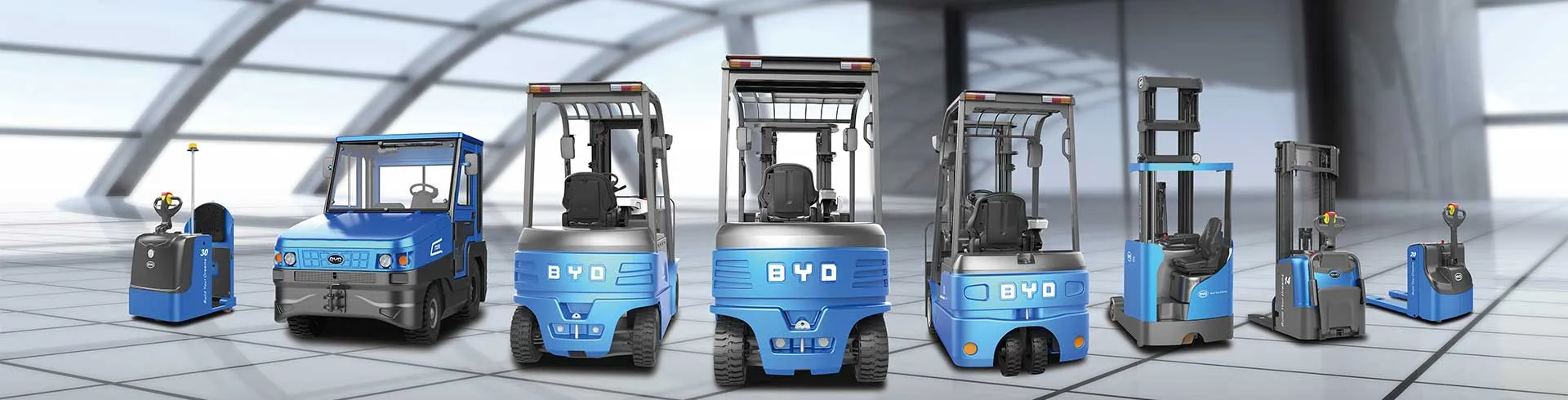
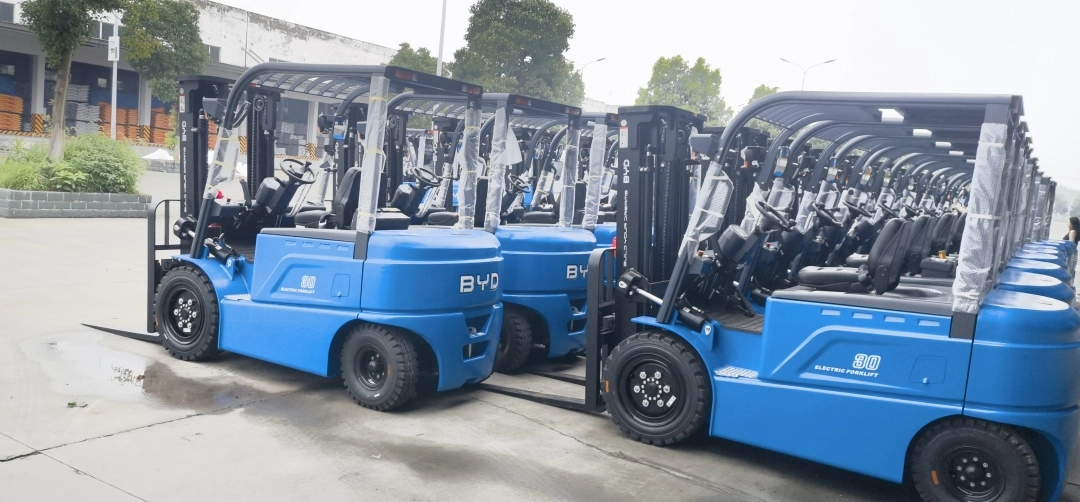
Tafsiran terperinci tentang perubahan penggunaan tenaga forklift penyimpanan bateri litium dalam persekitaran suhu rendah(Rajah1)

Dalam senario seperti pergudangan rantai sejuk dan logistik suhu rendah, trak forklift pergudangan litium-elektrik ialah peralatan operasi teras, tetapi persekitaran suhu rendah akan mengubah prestasi penggunaan tenaganya dengan ketara, menjejaskan kos operasi dan kecekapan operasi. Untuk mendapatkan pemahaman yang mendalam tentang undang-undang perubahan ini, adalah penting bagi syarikat pergudangan untuk mengoptimumkan pengurusan peralatan.

Faktor Teras Yang Mempengaruhi Penggunaan Tenaga Forklift Penyimpanan Bateri Litium dalam Persekitaran Suhu Rendah

Penurunan aktiviti bateri mencetuskan lonjakan penggunaan tenaga.

Tindak balas teras bateri litium bergantung pada aktiviti bahan elektrod dan elektrolit. Apabila suhu ambien jatuh di bawah 0 ° C, kelikatan elektrolit meningkat, kelajuan penghantaran ion diperlahankan, dan keupayaan nyahcas bateri berkurangan dengan ketara. Untuk mengekalkan kuasa operasi biasa forklift, bateri perlu mengeluarkan arus yang lebih tinggi, yang secara langsung membawa kepada peningkatan ketara dalam penggunaan tenaga seunit beban kerja. Pada masa yang sama, kapasiti bateri yang tersedia pada suhu rendah akan mengecut, dan jarak pelayaran sebenar akan dipendekkan, secara tidak langsung meningkatkan kos penggunaan tenaga.

Pengurangan kecekapan sistem kuasa meningkatkan penggunaan tenaga.

Suhu rendah bukan sahaja menjejaskan bateri, tetapi juga menjejaskan sistem penghantaran kuasa forklift. Kelikatan minyak hidraulik meningkat pada suhu rendah, rintangan operasi pam hidraulik dan saluran paip meningkat, dan forklift perlu menggunakan lebih banyak tenaga apabila mengangkat dan mengendalikan barangan. Di samping itu, rintangan belitan motor akan meningkat pada suhu rendah, dan kecekapan penukaran tenaga elektrik kepada tenaga mekanikal akan menurun, seterusnya meningkatkan tahap penggunaan tenaga keseluruhan.

Undang-undang variasi penggunaan tenaga bagi julat suhu rendah yang berbeza

Mengikut data pemantauan sebenar, apabila suhu ambien jatuh dalam julat 0 ° C hingga 10 ° C, penggunaan tenaga trak forklift penyimpanan bateri litium akan meningkat sebanyak 15% hingga 25% berbanding dengan persekitaran suhu bilik (20 ° C hingga 25 ° C). Pada masa ini, aktiviti bateri akan berkurangan sedikit, peningkatan rintangan sistem kuasa tidak jelas, dan peningkatan penggunaan tenaga berada dalam julat terkawal. Apabila suhu menurun kepada julat -10 ° C hingga 0 ° C, penggunaan tenaga akan meningkat kepada 30% hingga 45% suhu bilik, kapasiti bateri akan menyusut sebanyak kira-kira 20% hingga 30%, dan rintangan operasi sistem hidraulik akan meningkat dengan ketara. Jika suhu di bawah -10 ° C, penggunaan tenaga akan melebihi 50% suhu bilik, kecekapan nyahcas bateri akan berkurangan dengan mendadak, dan kuasa operasi trak forklift sukar untuk dikekalkan, dan bekalan tenaga yang kerap diperlukan.

Langkah-langkah praktikal untuk mengurangkan penggunaan tenaga forklift penyimpanan bateri litium dalam persekitaran suhu rendah.

Optimumkan pengurusan prapemanasan dan penebat bateri.

Memanaskan bateri litium terlebih dahulu boleh meningkatkan aktiviti elektrolit dengan berkesan dan mengurangkan penggunaan tenaga semasa nyahcas. Pada masa yang sama, lengkapkan bateri dengan pelindung haba atau letakkan kawasan penyimpanan bateri suhu malar di kawasan kerja untuk mengurangkan kehilangan tenaga bateri dalam persekitaran suhu rendah. Jurang kerja memindahkan bateri ke kawasan yang lebih panas tepat pada masanya untuk mengekalkan keadaan aktif bateri dan mengelakkan peningkatan berterusan dalam penggunaan tenaga.

Laraskan mod operasi dan kitaran penyelenggaraan.

Dalam persekitaran suhu rendah, mengurangkan kelajuan operasi dan ketinggian lif forklift dengan sewajarnya boleh mengurangkan beban pada sistem kuasa dan mengurangkan penggunaan tenaga. Di samping itu, memendekkan kitaran penggantian minyak hidraulik, dan memilih minyak hidraulik yang disesuaikan dengan suhu rendah boleh mengurangkan rintangan operasi sistem hidraulik. Sentiasa semak keadaan pelinciran motor dan komponen penghantaran untuk memastikan kecekapan penghantaran kuasa berada pada tahap terbaik dan penggunaan tenaga dapat dikawal dengan berkesan.

Dengan memahami secara mendalam mekanisme kesan persekitaran suhu rendah terhadap penggunaan tenaga forklift penyimpanan bateri litium, memahami undang-undang perubahan penggunaan tenaga bagi julat yang berbeza, dan mengambil langkah pengoptimuman yang disasarkan, perusahaan penyimpanan boleh mengurangkan kos operasi forklift dengan berkesan dalam senario suhu rendah dan meningkatkan kecekapan operasi dan kebolehpercayaan peralatan.
Telefon.

WeChat

Whatsapp

Alamat e-mel

We use cookie to improve your online experience. By continuing to browse this website, you agree to our use of cookie.

Cookies

Please read our Terms and Conditions and this Policy before accessing or using our Services. If you cannot agree with this Policy or the Terms and Conditions, please do not access or use our Services. If you are located in a jurisdiction outside the European Economic Area, by using our Services, you accept the Terms and Conditions and accept our privacy practices described in this Policy.
We may modify this Policy at any time, without prior notice, and changes may apply to any Personal Information we already hold about you, as well as any new Personal Information collected after the Policy is modified. If we make changes, we will notify you by revising the date at the top of this Policy. We will provide you with advanced notice if we make any material changes to how we collect, use or disclose your Personal Information that impact your rights under this Policy. If you are located in a jurisdiction other than the European Economic Area, the United Kingdom or Switzerland (collectively “European Countries”), your continued access or use of our Services after receiving the notice of changes, constitutes your acknowledgement that you accept the updated Policy. In addition, we may provide you with real time disclosures or additional information about the Personal Information handling practices of specific parts of our Services. Such notices may supplement this Policy or provide you with additional choices about how we process your Personal Information.


Cookies

Cookies are small text files stored on your device when you access most Websites on the internet or open certain emails. Among other things, Cookies allow a Website to recognize your device and remember if you've been to the Website before. Examples of information collected by Cookies include your browser type and the address of the Website from which you arrived at our Website as well as IP address and clickstream behavior (that is the pages you view and the links you click).We use the term cookie to refer to Cookies and technologies that perform a similar function to Cookies (e.g., tags, pixels, web beacons, etc.). Cookies can be read by the originating Website on each subsequent visit and by any other Website that recognizes the cookie. The Website uses Cookies in order to make the Website easier to use, to support a better user experience, including the provision of information and functionality to you, as well as to provide us with information about how the Website is used so that we can make sure it is as up to date, relevant, and error free as we can. Cookies on the Website We use Cookies to personalize your experience when you visit the Site, uniquely identify your computer for security purposes, and enable us and our third-party service providers to serve ads on our behalf across the internet.

We classify Cookies in the following categories:
 ●  Strictly Necessary Cookies
 ●  Performance Cookies
 ●  Functional Cookies
 ●  Targeting Cookies


Cookie List
A cookie is a small piece of data (text file) that a website – when visited by a user – asks your browser to store on your device in order to remember information about you, such as your language preference or login information. Those cookies are set by us and called first-party cookies. We also use third-party cookies – which are cookies from a domain different than the domain of the website you are visiting – for our advertising and marketing efforts. More specifically, we use cookies and other tracking technologies for the following purposes:

Strictly Necessary Cookies
These cookies are necessary for the website to function and cannot be switched off in our systems. They are usually only set in response to actions made by you which amount to a request for services, such as setting your privacy preferences, logging in or filling in forms. You can set your browser to block or alert you about these cookies, but some parts of the site will not then work. These cookies do not store any personally identifiable information.

Functional Cookies
These cookies enable the website to provide enhanced functionality and personalisation. They may be set by us or by third party providers whose services we have added to our pages. If you do not allow these cookies then some or all of these services may not function properly.

Performance Cookies
These cookies allow us to count visits and traffic sources so we can measure and improve the performance of our site. They help us to know which pages are the most and least popular and see how visitors move around the site. All information these cookies collect is aggregated and therefore anonymous. If you do not allow these cookies we will not know when you have visited our site, and will not be able to monitor its performance.

Targeting Cookies
These cookies may be set through our site by our advertising partners. They may be used by those companies to build a profile of your interests and show you relevant adverts on other sites. They do not store directly personal information, but are based on uniquely identifying your browser and internet device. If you do not allow these cookies, you will experience less targeted advertising.

How To Turn Off Cookies
You can choose to restrict or block Cookies through your browser settings at any time. Please note that certain Cookies may be set as soon as you visit the Website, but you can remove them using your browser settings. However, please be aware that restricting or blocking Cookies set on the Website may impact the functionality or performance of the Website or prevent you from using certain services provided through the Website. It will also affect our ability to update the Website to cater for user preferences and improve performance. Cookies within Mobile Applications

We only use Strictly Necessary Cookies on our mobile applications. These Cookies are critical to the functionality of our applications, so if you block or delete these Cookies you may not be able to use the application. These Cookies are not shared with any other application on your mobile device. We never use the Cookies from the mobile application to store personal information about you.

If you have questions or concerns regarding any information in this Privacy Policy, please contact us by email at . You can also contact us via our customer service at our Site.