2026-06-21

BYD Blue Ant P15 Häufige Fehlerbehebung und grundlegende Behandlungsmethoden

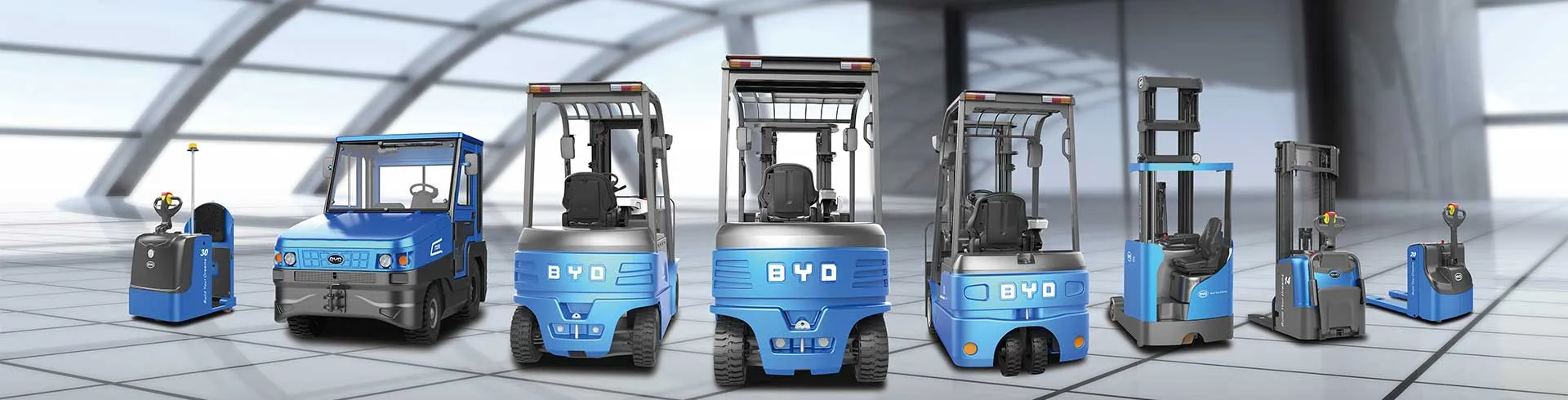
BYD Blue Ant P15 Häufige Fehlerbehebung und grundlegende Behandlungsmethoden(Figur1)

Als in industriellen Szenarien häufig verwendeter Elektrostapler ist der Blue Ant P15 anfällig für verschiedene kleinere Fehler im täglichen Betrieb mit hoher Intensität. Durch die Beherrschung grundlegender Untersuchungs- und Behandlungsmethoden kann er Ausfallzeiten effektiv reduzieren und die Betriebseffizienz sicherstellen.

Fehlersuche und Behandlung von häufigen Fehlern im Stromnetz

Fehlersuche und Behandlung von unzureichender Leistungsabgabe

Wenn der Gabelstapler eine unzureichende Leistung und ein schwaches Steigen hat, sollte zunächst die verbleibende Batterieleistung überprüft werden. Wenn der Leistungspegel niedrig ist, muss der Ladevorgang gestoppt und die Leistung rechtzeitig wiederhergestellt werden. Prüfen Sie dann, ob das Batteriekabel locker oder oxidiert ist. Wenn sich herausstellt, dass die Klemmen locker sind, muss es mit Werkzeugen festgezogen werden. Die oxidierten Teile können mit feinem Schleifpapier poliert und wieder angeschlossen werden. Darüber hinaus muss überprüft werden, ob die Motorentlüftungen durch Staub und Schmutz blockiert sind. Reinigen Sie die Entlüftungsöffnungen rechtzeitig, um eine normale Wärmeableitung des Motors zu gewährleisten und Leistungsverluste durch Überhitzung zu vermeiden.

Umgang mit plötzlichem Leistungsverlust während der Fahrt

Wenn der Gabelstapler während der Fahrt plötzlich den Strom verliert, muss der Gabelstapler in einen sicheren Bereich gebracht und die Stromversorgung so schnell wie möglich abgeschaltet werden, um dann zu prüfen, ob die Sicherung durchgebrannt ist. Wenn bestätigt wird, dass die Sicherung beschädigt ist, muss die entsprechende Sicherung derselben Spezifikation ausgetauscht werden. Wenn sich die Sicherung im Normalzustand befindet, prüfen Sie, ob das Gaspedal feststeckt, reinigen Sie die Fremdkörper um das Pedal herum und stellen Sie sicher, dass das Pedal flexibel zurückfedern kann.

Fehlersuche und -behandlung beim Ladesystem

Fehlerbehebung bei Nichtreaktion auf den Ladevorgang

Wenn während des Ladevorgangs keine Reaktion erfolgt, überprüfen Sie zunächst, ob die Ladebuchse normal eingeschaltet ist, und ersetzen Sie andere Steckdosen zum Testen. Prüfen Sie dann, ob das Verbindungskabel zwischen dem Ladegerät und dem Akku beschädigt oder gebrochen ist. Bei Beschädigungen ersetzen Sie rechtzeitig die intakte Leitung. Prüfen Sie außerdem, ob die Ladeschnittstelle des Akkus oxidiert oder korrodiert ist. Schließen Sie nach dem Schleifen der Schnittstelle den Ladevorgang wieder an, um zu beobachten, ob er sich wieder normalisiert.

Die Ladegeschwindigkeit ist zu langsam, um sie zu bewältigen.

Wenn Sie feststellen, dass die Ladegeschwindigkeit des Gabelstaplers deutlich langsamer ist, prüfen Sie zunächst, ob die Umgebungstemperatur zu niedrig ist. Eine niedrige Temperatur beeinträchtigt die Ladeeffizienz der Batterie. Sie können den Gabelstapler zum Aufladen in eine Umgebung mit normaler Temperatur bringen. Wenn die Umgebungstemperatur normal ist, können Sie mehrere aufeinanderfolgende Ladezeiten aufzeichnen. Wenn die Ladezeit zu lange dauert, kann es sein, dass der Akku Alterungserscheinungen aufweist. Wenden Sie sich zum Testen und Bewerten an einen Fachmann.

Häufige Fehlerbehandlung von Steuerungssystemen

Grundlegende Verarbeitung der Lenkkarte

Wenn die Gabelstaplerlenkung feststeckt und die Bedienung mühsam ist, prüfen Sie zunächst, ob das Lenköl den Standardflüssigkeitsstand erreicht hat. Wenn das Öl nicht ausreicht, muss das Lenköl des angegebenen Typs nachgefüllt werden. Prüfen Sie dann, ob Fremdkörper um das Lenkrad herum stecken, und räumen Sie rechtzeitig die Hindernisse aus dem Weg. Wenn es immer noch feststeckt, prüfen Sie, ob die Schrauben der Lenkstange locker sind, und verwenden Sie Werkzeuge, um die Pleuelstangenschrauben richtig festzuziehen.

Notfallbehandlung bei Bremsversagen

Wenn Sie auf eine Notsituation mit Bremsversagen stoßen, müssen Sie die Handbremse langsam hochziehen, um den Gabelstapler in eine sichere Position zu bringen, und dann prüfen, ob die Bremsbeläge übermäßig abgenutzt sind. Wenn die Dicke der Bremsbeläge nicht ausreicht, müssen Sie die entsprechenden Bremsbeläge rechtzeitig austauschen. Prüfen Sie gleichzeitig, ob in der Bremsleitung Luft austritt. Wenn die Rohrleitungsschnittstelle locker ist, müssen Sie die Schnittstelle festziehen. Wenn das Problem immer noch nicht gelöst werden kann, müssen Sie sich an ein professionelles Wartungspersonal wenden, um es zu beheben.

Im täglichen Betrieb können eine regelmäßige Reinigung und grundlegende Inspektionen von Gabelstaplern die Ausfallwahrscheinlichkeit wirksam verringern. Wenn Sie auf komplexe Fehlfunktionen oder Probleme stoßen, die Sie nicht selbst bewältigen können, zerlegen Sie diese nicht gewaltsam. Wenden Sie sich rechtzeitig an professionelles Kundendienstpersonal, um den sicheren und stabilen Betrieb des Gabelstaplers zu gewährleisten.


Whatsapp

WeChat

Kontaktieren Sie uns

Verhandeln.

We use cookie to improve your online experience. By continuing to browse this website, you agree to our use of cookie.

Cookies

Please read our Terms and Conditions and this Policy before accessing or using our Services. If you cannot agree with this Policy or the Terms and Conditions, please do not access or use our Services. If you are located in a jurisdiction outside the European Economic Area, by using our Services, you accept the Terms and Conditions and accept our privacy practices described in this Policy.
We may modify this Policy at any time, without prior notice, and changes may apply to any Personal Information we already hold about you, as well as any new Personal Information collected after the Policy is modified. If we make changes, we will notify you by revising the date at the top of this Policy. We will provide you with advanced notice if we make any material changes to how we collect, use or disclose your Personal Information that impact your rights under this Policy. If you are located in a jurisdiction other than the European Economic Area, the United Kingdom or Switzerland (collectively “European Countries”), your continued access or use of our Services after receiving the notice of changes, constitutes your acknowledgement that you accept the updated Policy. In addition, we may provide you with real time disclosures or additional information about the Personal Information handling practices of specific parts of our Services. Such notices may supplement this Policy or provide you with additional choices about how we process your Personal Information.


Cookies

Cookies are small text files stored on your device when you access most Websites on the internet or open certain emails. Among other things, Cookies allow a Website to recognize your device and remember if you've been to the Website before. Examples of information collected by Cookies include your browser type and the address of the Website from which you arrived at our Website as well as IP address and clickstream behavior (that is the pages you view and the links you click).We use the term cookie to refer to Cookies and technologies that perform a similar function to Cookies (e.g., tags, pixels, web beacons, etc.). Cookies can be read by the originating Website on each subsequent visit and by any other Website that recognizes the cookie. The Website uses Cookies in order to make the Website easier to use, to support a better user experience, including the provision of information and functionality to you, as well as to provide us with information about how the Website is used so that we can make sure it is as up to date, relevant, and error free as we can. Cookies on the Website We use Cookies to personalize your experience when you visit the Site, uniquely identify your computer for security purposes, and enable us and our third-party service providers to serve ads on our behalf across the internet.

We classify Cookies in the following categories:
 ●  Strictly Necessary Cookies
 ●  Performance Cookies
 ●  Functional Cookies
 ●  Targeting Cookies


Cookie List
A cookie is a small piece of data (text file) that a website – when visited by a user – asks your browser to store on your device in order to remember information about you, such as your language preference or login information. Those cookies are set by us and called first-party cookies. We also use third-party cookies – which are cookies from a domain different than the domain of the website you are visiting – for our advertising and marketing efforts. More specifically, we use cookies and other tracking technologies for the following purposes:

Strictly Necessary Cookies
These cookies are necessary for the website to function and cannot be switched off in our systems. They are usually only set in response to actions made by you which amount to a request for services, such as setting your privacy preferences, logging in or filling in forms. You can set your browser to block or alert you about these cookies, but some parts of the site will not then work. These cookies do not store any personally identifiable information.

Functional Cookies
These cookies enable the website to provide enhanced functionality and personalisation. They may be set by us or by third party providers whose services we have added to our pages. If you do not allow these cookies then some or all of these services may not function properly.

Performance Cookies
These cookies allow us to count visits and traffic sources so we can measure and improve the performance of our site. They help us to know which pages are the most and least popular and see how visitors move around the site. All information these cookies collect is aggregated and therefore anonymous. If you do not allow these cookies we will not know when you have visited our site, and will not be able to monitor its performance.

Targeting Cookies
These cookies may be set through our site by our advertising partners. They may be used by those companies to build a profile of your interests and show you relevant adverts on other sites. They do not store directly personal information, but are based on uniquely identifying your browser and internet device. If you do not allow these cookies, you will experience less targeted advertising.

How To Turn Off Cookies
You can choose to restrict or block Cookies through your browser settings at any time. Please note that certain Cookies may be set as soon as you visit the Website, but you can remove them using your browser settings. However, please be aware that restricting or blocking Cookies set on the Website may impact the functionality or performance of the Website or prevent you from using certain services provided through the Website. It will also affect our ability to update the Website to cater for user preferences and improve performance. Cookies within Mobile Applications

We only use Strictly Necessary Cookies on our mobile applications. These Cookies are critical to the functionality of our applications, so if you block or delete these Cookies you may not be able to use the application. These Cookies are not shared with any other application on your mobile device. We never use the Cookies from the mobile application to store personal information about you.

If you have questions or concerns regarding any information in this Privacy Policy, please contact us by email at . You can also contact us via our customer service at our Site.


WhatsApp avatar

Click to Chat.

Im online now.

Hey, my name is Tim. The CPO of JXD, how can I assist you today?

WhatsApp Us

WhatsApp us