2026-07-08

BYD Gabelstapler Fahrgestell Teile Verschleiß Ersatzzyklus und Teile Auswahl Fähigkeiten

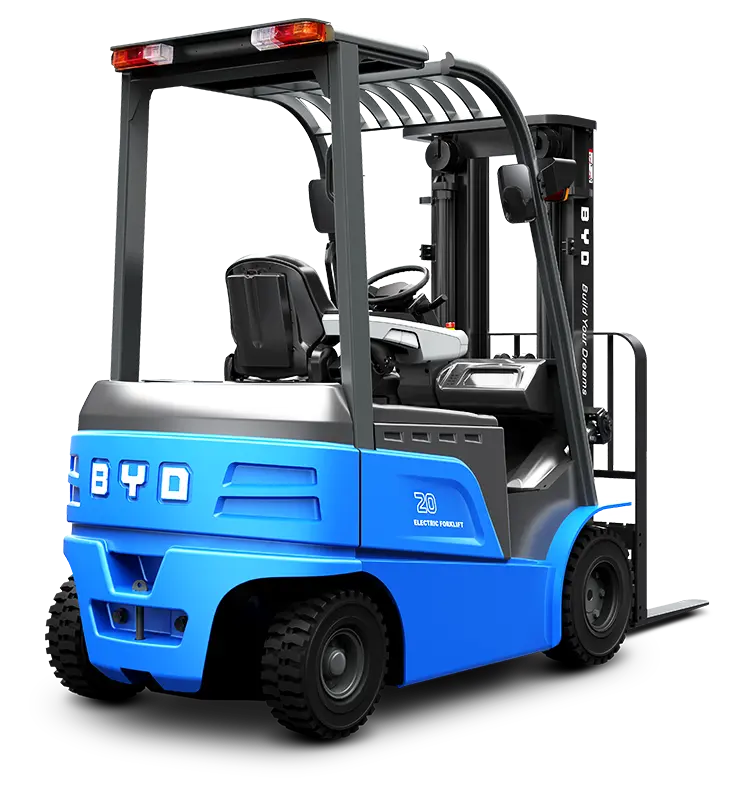
BYD Gabelstapler Fahrgestell Teile Verschleiß Ersatzzyklus und Teile Auswahl Fähigkeiten(Figur1)

Das Fahrgestell eines Elektrostaplers ist die Kernkomponente, die das Gewicht des gesamten Fahrzeugs trägt und die Stabilität des Betriebs gewährleistet. Der Verschleißzustand der verschiedenen Zubehörteile steht in direktem Zusammenhang mit der Betriebssicherheit und der Betriebseffizienz des Gabelstaplers. Wenn im täglichen Gebrauch die Verschleißüberwachung und der rechtzeitige Austausch des Fahrwerkszubehörs vernachlässigt werden, erhöht dies nicht nur die Betriebs- und Wartungskosten, sondern kann auch Sicherheitsrisiken verursachen. Im Folgenden werden die Verschleißregeln der wichtigsten Fahrwerkszubehörteile, die Methode zur Beurteilung des Austauschzyklus und praktische Fähigkeiten bei der Teileauswahl im Detail vorgestellt.

Der Verschleißwechselzyklus des Kerngehäusezubehörs muss in Kombination mit der Betriebsszene flexibel beurteilt werden:

Da es sich um ein Teil handelt, das direkt mit dem Boden in Berührung kommt, wird der Reifenverschleiß stark von den Straßenverhältnissen und der Belastungshäufigkeit beeinflusst. Bei häufigen Schwerlast-, Schotter- oder konkaven und konvexen Straßeneinsätzen muss die Abnutzungstiefe des Reifenmusters bis zur vom Originalwerk festgelegten unteren Grenze (in der Regel 1,6 mm) rechtzeitig ausgetauscht werden, mit einem ungefähren Zyklus von 6-12 Monaten; bei Arbeiten auf einer ebenen Fahrbahn mit geringer Belastung kann der Austauschzyklus auf 18-24 Monate verlängert werden. Wenn anormale Schäden wie Risse in der Lauffläche und Ausbeulungen auftreten, muss es unabhängig von der Nutzungsdauer sofort ersetzt werden.

Die Lenkstangenbuchse hat hauptsächlich die Funktion der Dämpfung und Stoßdämpfung. Sie altert und reißt unter dem Einfluss von Lenkbeanspruchung und Vibrationen lange Zeit. Wenn während der Lenkung offensichtliche Lücken oder abnormale Geräusche auftreten oder die Buchse bei der Inspektion verformt und beschädigt wird, muss sie rechtzeitig ausgetauscht werden. Der allgemeine Austauschzyklus beträgt 12-24 Monate, je nach Arbeitsintensität.

Der Ausfall des Stoßdämpfers führt zu einer Zunahme der Unebenheiten des Gabelstaplers, was die Fahrstabilität beeinträchtigt. Bei einem Ölleck oder einer anormalen Zunahme der Vibrationen während der Fahrt muss der Stoßdämpfer ausgetauscht werden. Der Austauschzyklus bei normalem Gebrauch beträgt etwa 24-36 Monate.

Der Verschleiß des Bremsschuhs wirkt sich direkt auf die Bremsleistung aus. Wenn die Schuhdicke bis zur ursprünglichen Verschleißgrenze (in der Regel 2 mm) abgenutzt ist, muss sie ersetzt werden. Der Austauschzyklus beträgt 6-12 Monate in Hochfrequenzbetriebsszenarien und kann im Niederfrequenzbetrieb auf 18-24 Monate verlängert werden.

Bei der Auswahl von Fahrwerkszubehör müssen Sie die folgenden praktischen Fähigkeiten beherrschen:

Achten Sie auf die Materialanpassung. Verschiedene Teile haben unterschiedliche Anforderungen an die Materialleistung. Zum Beispiel müssen Reifen aus verschleißfestem und reißfestem Gummi und Bremsbacken aus Materialien mit guter Hitzebeständigkeit und stabilem Reibungskoeffizienten hergestellt werden, um die Anforderungen von Gabelstaplerbetriebsszenarien zu erfüllen.

Um die Übereinstimmung der Spezifikationen zu bestätigen, ist es notwendig, beim Kauf von Zubehör das Gabelstaplermodell, die Lastklasse und andere Parameter genau abzustimmen, um Installationsschwierigkeiten oder Betriebsstörungen aufgrund uneinheitlicher Spezifikationen zu vermeiden. Es wird empfohlen, sich auf die Teilespezifikationen im technischen Handbuch des Original-Gabelstaplers zu beziehen.

Überprüfen Sie die Prozessdetails, hochwertige Teile haben in der Regel ein regelmäßiges Aussehen, eine feine Verarbeitungstechnologie, wie z. B. eine glatte Oberfläche der Buchse ohne Grate, ein starkes Schweißen des Stoßdämpfers ohne Risse, diese Details stehen in direktem Zusammenhang mit der Lebensdauer der Teile.

Unter Berücksichtigung der Kosteneffizienz besteht keine Notwendigkeit, blindlings nach hochpreisigem Zubehör zu suchen. Sie können geeignete Produkte entsprechend Ihrer eigenen Betriebsintensität auswählen. Für Langzeit-Hochfrequenz-Gabelstapler können Sie mittleres bis hochwertiges Zubehör mit besserer Haltbarkeit wählen, und für den Niederfrequenzbetrieb können Sie kostengünstigeres konventionelles Zubehör wählen, um Kosten und Lebensdauer auszugleichen.

Insgesamt erfordert die Wartung und der Austausch von Teilen des Fahrgestells eines elektrischen Gabelstaplers regelmäßige Verschleißtests, einen angemessenen Austauschzyklus und wissenschaftliche Fähigkeiten bei der Auswahl der Teile, um die Lebensdauer des Gabelstaplers effektiv zu verlängern und die Sicherheit und Effizienz des Betriebs zu gewährleisten.
Telefon

WeChat

Whatsapp

E-Mail Adresse

We use cookie to improve your online experience. By continuing to browse this website, you agree to our use of cookie.

Cookies

Please read our Terms and Conditions and this Policy before accessing or using our Services. If you cannot agree with this Policy or the Terms and Conditions, please do not access or use our Services. If you are located in a jurisdiction outside the European Economic Area, by using our Services, you accept the Terms and Conditions and accept our privacy practices described in this Policy.
We may modify this Policy at any time, without prior notice, and changes may apply to any Personal Information we already hold about you, as well as any new Personal Information collected after the Policy is modified. If we make changes, we will notify you by revising the date at the top of this Policy. We will provide you with advanced notice if we make any material changes to how we collect, use or disclose your Personal Information that impact your rights under this Policy. If you are located in a jurisdiction other than the European Economic Area, the United Kingdom or Switzerland (collectively “European Countries”), your continued access or use of our Services after receiving the notice of changes, constitutes your acknowledgement that you accept the updated Policy. In addition, we may provide you with real time disclosures or additional information about the Personal Information handling practices of specific parts of our Services. Such notices may supplement this Policy or provide you with additional choices about how we process your Personal Information.


Cookies

Cookies are small text files stored on your device when you access most Websites on the internet or open certain emails. Among other things, Cookies allow a Website to recognize your device and remember if you've been to the Website before. Examples of information collected by Cookies include your browser type and the address of the Website from which you arrived at our Website as well as IP address and clickstream behavior (that is the pages you view and the links you click).We use the term cookie to refer to Cookies and technologies that perform a similar function to Cookies (e.g., tags, pixels, web beacons, etc.). Cookies can be read by the originating Website on each subsequent visit and by any other Website that recognizes the cookie. The Website uses Cookies in order to make the Website easier to use, to support a better user experience, including the provision of information and functionality to you, as well as to provide us with information about how the Website is used so that we can make sure it is as up to date, relevant, and error free as we can. Cookies on the Website We use Cookies to personalize your experience when you visit the Site, uniquely identify your computer for security purposes, and enable us and our third-party service providers to serve ads on our behalf across the internet.

We classify Cookies in the following categories:
 ●  Strictly Necessary Cookies
 ●  Performance Cookies
 ●  Functional Cookies
 ●  Targeting Cookies


Cookie List
A cookie is a small piece of data (text file) that a website – when visited by a user – asks your browser to store on your device in order to remember information about you, such as your language preference or login information. Those cookies are set by us and called first-party cookies. We also use third-party cookies – which are cookies from a domain different than the domain of the website you are visiting – for our advertising and marketing efforts. More specifically, we use cookies and other tracking technologies for the following purposes:

Strictly Necessary Cookies
These cookies are necessary for the website to function and cannot be switched off in our systems. They are usually only set in response to actions made by you which amount to a request for services, such as setting your privacy preferences, logging in or filling in forms. You can set your browser to block or alert you about these cookies, but some parts of the site will not then work. These cookies do not store any personally identifiable information.

Functional Cookies
These cookies enable the website to provide enhanced functionality and personalisation. They may be set by us or by third party providers whose services we have added to our pages. If you do not allow these cookies then some or all of these services may not function properly.

Performance Cookies
These cookies allow us to count visits and traffic sources so we can measure and improve the performance of our site. They help us to know which pages are the most and least popular and see how visitors move around the site. All information these cookies collect is aggregated and therefore anonymous. If you do not allow these cookies we will not know when you have visited our site, and will not be able to monitor its performance.

Targeting Cookies
These cookies may be set through our site by our advertising partners. They may be used by those companies to build a profile of your interests and show you relevant adverts on other sites. They do not store directly personal information, but are based on uniquely identifying your browser and internet device. If you do not allow these cookies, you will experience less targeted advertising.

How To Turn Off Cookies
You can choose to restrict or block Cookies through your browser settings at any time. Please note that certain Cookies may be set as soon as you visit the Website, but you can remove them using your browser settings. However, please be aware that restricting or blocking Cookies set on the Website may impact the functionality or performance of the Website or prevent you from using certain services provided through the Website. It will also affect our ability to update the Website to cater for user preferences and improve performance. Cookies within Mobile Applications

We only use Strictly Necessary Cookies on our mobile applications. These Cookies are critical to the functionality of our applications, so if you block or delete these Cookies you may not be able to use the application. These Cookies are not shared with any other application on your mobile device. We never use the Cookies from the mobile application to store personal information about you.

If you have questions or concerns regarding any information in this Privacy Policy, please contact us by email at . You can also contact us via our customer service at our Site.